Tuesday, June 20, 2006

Music to my ears


I normally don't listen to much popular music. I reserve my ears for better stuff like rock, trance, etc etc. But once in a while, there are artists worth a dekko despite being currently popular (complicated oxymoron). Here are two artists with talent, sense of music and the "do your thing" spirit.

If you have been living outside of a cave, you should have heard the new "group" Gnarls Barkley. Well, at least their song "Crazy", which is somewhere close to being the most popular song of the moment. The brain behind this group turns out to be a guy nicknamed "Danger mouse" aka Brian Burton. He shot to fame/notoriety a couple of years back with his out of the box remix titled "The Grey Album". Burton's music in essence cannot be classified into any one slot. That usually means either no one is interested in your music or everyone is. Looks like Burton is slowly getting into the second category. Good for him and good for us listeners.


The other artist currently making waves on both shores of the Atlantic: KT Tunstall. A Brit Chinese-Irish musician with a catchy name and an inexplicable penchant for legwarmers, she has a great voice. At least I think so. I must admit that I have not heard more than 3 songs of hers. But I was intrigued when I first heard an acoustic rock version of her song "Black horse and a cherry tree". It has been a while since I had seen anyone use one of those foot operated loop pedals on stage. She uses this to add to her "alt" music. Try finding her stuff. I have been told quite a lot of her videos are available online for free.

Monday, June 12, 2006

can you hear it

if you can hear this, you are young of heart. at least young.

Monday, May 29, 2006

The code


Despite the negative reviews in all major newspapers, I watched the Da Vinci code this weekend. There was no way I was going to pass up a movie with Hanks acting alongside beautiful Audrey Tautou in it. Though I have seen better acting from both, I think it was a decent movie.

While there are a few places where the whole cinema crew seems to have lingered on to admire something that the viewer doesn't see and isn't shown, the overall pace is decent. Cinematically, there are a few scenes that linger in your head after you leave the cinema. Most of Paul Bettany's acting (Silas) is quite arresting. Despite not being the most important scene of the movie, the visual juxtaposition of 18th century London with that of today's while depicting Newton's funeral was pretty close to genius. My biggest gripe: Overall, the movie retains a very third persony feel to it. At no point is the viewer engaged enough to become either Hanks or Audrey and solve the thing in their head. The screenwriting was wobblier than the text of the novel and most of the action sequences don't manage to transport you anywhere out of your seat.

Acting: Paul Bettany was natural. You can imagine a misguided religious nut through him. Thanks to him, Opus Dei is not going to see an increase in their roster anytime soon. Audrey brings intensity to certain scenes. I love her acting and her looks. This was nowhere close to her best (watch "A very long engagement" for comparison). Tom Hanks was a mixed bag. He is very "Terminal" here. Somehow despite being in almost all the scenes, you can't quite remember what his acting contribution was. He is in serious danger of melding too much into the environment with each passing movie. Ian McKellen was good as usual. Funny that he is also in the other big movie released recently (X-3).

Overall: I don't know what the fuss is about. If someone loses their faith because of this movie, they haven't been paying much attention till this point. Religion and religious books contain more lies than Dan Brown could fill in all of his books! So the church should stop whining.

Thursday, May 25, 2006

The great wall of Arizona


Arizona doesn't lack touristy sights. But there is a real chance to add one more, this one for generations to come. The Qin dynasty, after whom China is named, started building a wall to keep the illegal Mongols out. Arizona, Texas and California have the chance to build one to keep the new illegals out. So, while they are at it, why not make it grand. Build it such that it can fit a couple of SUVs going in each direction.

Given how royally future generations are going to get screwed by today's economic and environmental policies, its only fair that we build them a wall. Help them earn some tourism dollars.

Wednesday, May 24, 2006

1610-1984, 1896-??

In the year 1610 a scientist named Galileo came to the radical conclusion that the moons of Jupiter are well...the moons of Jupiter, i.e. they go around the planet Jupiter. Sounds lame? In fact, it was the nail in the coffin for the geo-centric model. There was proof that there are atleast a few celestial bodies that don't seem to care too much about us or in fact about the planet that we inhabit. It took till the year 1984 for the most powerful institution of the 1600s to agree that Galileo was right and they were wrong in threatening and bullying him.

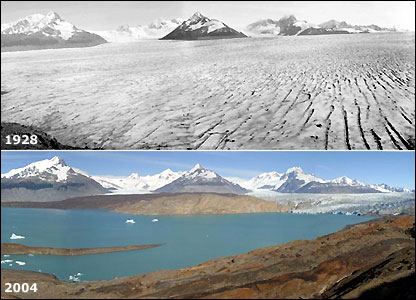
It's been 110 years since a Swede named Arrhenius came up with a rather loony idea that maybe the carbon dioxide released by all the coal burning might be heating up the atmosphere. Since that point, numerous scientists contributed to this radical idea that we tiny humans are slowly but surely changing the world that we are living in. In a philosophical reversal, the same humanity that couldn't be convinced that we were inhabitants of an inferior rock mindlessly circling the sun are now steadfastly unwilling to believe that we as a whole are big enough to cause immeasurable harm.

The current high church of humanity, Anglo-America and the free traders that it spawned and continues to cherish and nurture still refuse to buy into the arguments of scientists. Half-hearted agreement with the conclusions have not resulted in any far-reaching steps. It is stunning to think how narrow businesses and governments can be in defining themselves and their interests. Stunning given the fact that large corporations usually are the last people who need to be reminded that their primary aim is to make money and keep making money. What is irreconcilable? The simple fact that every decade since the 1960s, the cost of natural disasters has doubled (source: UK insurance report). Yet, it took the insurance industry till 2003/2004 to wake up to the trouble it was in. The energy industry is happy to behave in a manner similar to the cigarette industry of the 70s. Leave tomorrow's problems to the day after tomorrow. BP and Shell are happy to pay lip service by investing peanuts in greener technology and providing "education" on their websites. And, thank you for driving. A simple redefinition of what their business is or even a re-reading of their own websites can prevent them future headache and help avoid irrelevancy. They are not in the oil business but the energy business. Yet, why don't we see Shell/BP/etc sponsored cleaner fuel technology development? Finally, no one has ever accused any government of thinking too far into the future. But the incapacity to listen to people who are paid to do so verges on the immoral/insane. A very likely scenario in the years to comeby is a couple of Katrinas in one year and the insurace industry hitting the ejector button leaving the government to fly a energy-starved plane from the wingman's seat. Do the governments have a plan? Will they survive 350 years to apologize to all the scientists that they are rubbishing now?

Wednesday, May 10, 2006

whatever you say

Here is an interesting perspective on populism and how the right and left traditionally differed on populism.

Well, what can i say...let them eat cake?

Monday, May 08, 2006

Memories

It was never to be. That was my reasoning all this time. I had a near relationship experience about two years back. I liked her, she digged me. But neither had the guts to admit that there was more than just the on and off flirting. We were too different. Name any feature; race, nationality, religion, money. We were on other sides of the fence. Then she moved back to her home country. Something that could have been never was. It was in some deep corner of my mind hid by layers of useful and useless memories till today morning. I saw her again. With someone else. We nodded and passed each other as if we were colleagues who had last seen each other a few hours back. And that hurt.

Sunday, April 23, 2006

Scale of Economies


In my quest to quell boredom while flying (did quite a bit in the last 4 months), I read three books. Interestingly, they were all related to macroeconomics. These books and 2 talks, one by noted author and economist C.K. Prahalad and the other by the founder of Gramin bank M. Yunus, that I recently heard have me convinced of one thing. There are quite a few brilliant people deeply worried and spending a lot of think-time pondering about the reasons and solutions to global poverty.

The first book titled "The World is Flat" by NYTimes columnist Tom Friedman, takes the view that the problem of abject poverty can be traced back to the differences in opportunities from one set of people to another. The solution, hence, is the golden age of a "flat" world, where individuals are players in a more or less level playing or flat field. The author's panacea to poverty is the triumvirate of better communications (internet and actual physical communication), financial and social openness in certain developing economies (read India and China) and better educated individuals. The book, very well researched and written, is an optimistic view of how development blooms once the conditions are right. Some of the details listed are quite stunning like how UPS actually repairs Dell computers. That's right, they don't just ship damaged PCs and laptops. They actually collect it, repair it and send it back to the customer. Who knew! Without adding much more, let me just encourage you to read this book if you already haven't.

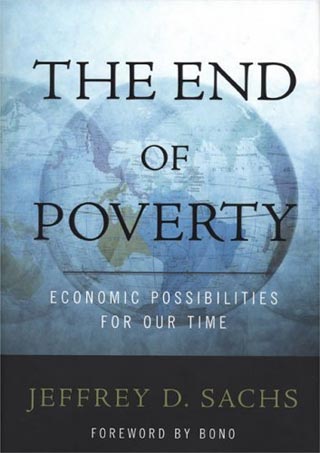
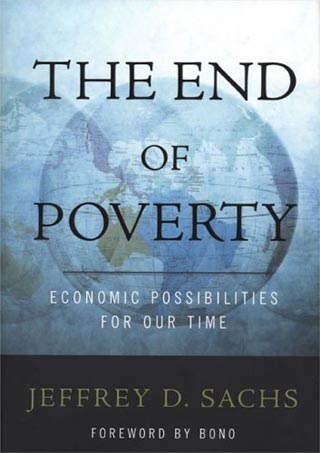
The second book "End of Poverty" by reknowned economist Jeffrey Sachs is more academic and at the same time emotional literature. Jeffrey Sachs has spent the better half of his life guiding governments like those of Chile, Poland and Russia after the commies, etc. on how to save their economies. In all these cases his main role was to persuade third parties to pump in money and save the day. Now he presents his case why the world should be pumping in money into Africa and other poor countries of the world. He wants to do all this not through the traditional loans or aid with riders (more on that below) but with outright aid with no riders on it. The book presents some interesting facts but can be hard reading because of all the...facts in it! However his main point is taken. Money is needed to kickstart certain essential aspects of any functioning economy; for e.g. financial institutions capable of lending money so that businesses that can potentially employ get started.

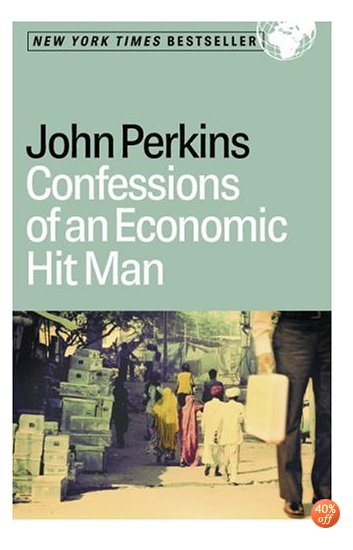
The third book "Confessions of an economic hitman" by John Perkins is a book in a different mold. While it is bound to be a favorite among conspiracy theory hacks, quite a bit of it is simply too tough to believe. The basic premise is that John Perkins in his youth was hired by MAIN, a former Boston firm specializing in energy consulting (somewhat like Halliburton) as an economic hit-man. His job: give a rosy outlook for energy consumption in third world countries so that the United States promises aid much in excess of what the country can ever pay back. If you did not know, aid is much more than money handed out. The usual rider is that the money has to be spent on specific projects and the purchasing has to be done from the donor country. So, if a country receives aid for energy projects from the U.S., companies like MAIN got the money not just to do a pre-investment check but also to do the building. Once the project was finished the country usually discovered that it never needed that big a project and of course cannot pay back, leading it to become economically and politically dependent on the donor country. The "beauty" of the system is that money lent to a country is usually collected from financial institutions in the United States and money spent on the projects is handled by the same set of institutions. Despite the money "handed back" to them, they still rightfully demand the principal back and when they cannot pay, the government or the army steps in depending on how deep of a mess the country is in. The author goes on to discuss specific "hits" that he carried out including a laundry list of failed Latin American countries and interestingly Saudi Arabia. Saudi Arabia, according to the author, was a whole different angle from the other hits. Here the idea was to pump in money into a country to modernize it and basically create a huge market in the likeness of an American marketplace and thus integrate it into the American economic system. A foolproof way of preventing a 1970s type oil embargo. Seems to have worked too well!

The common thread running through the three books is the fact that capital is free to move anywhere, except maybe North Korea and a few other godforsaken places. How it flows and to what effect decides our economic future. Ten bucks from your uncle is not the same as ten bucks from Uncle Sam and neither are the same as ten bucks made from selling your skills. That seems to be both the solution and the problem.

Sunday, April 09, 2006

Meditations at 40000 feet

1. Airspace, like Douglas Adams' space, is big. Mind-bogglingly big. Despite that, there is a necessity to employ thousands of gentlemen/(women?) called air traffic controllers, who show a flair for playing a version of quidditch in the sky. But why employ French ones. Bastards went on strike last week, leaving me on the ground inside a heated plane for a couple of hours. Leading to point two.

2. If you are queasy and showing it, people sharing the same row of seats are more worried than you will ever be about your situation.

3. The eastern coast of the Arabian peninsula with its large ports, cities and numerous oilwells makes for mindnumbing night-time gazing. Oil well flares in the middle east sky from 40000 feet. You can see them sucking the juice from down below and belching fire and smoke into the night sky. Mile upon mile of lighted highways feeding and being fed by these infernos.

4. They know where you live. Because you told them. Forgot the I-94 forms, even before boarding the flight to the US, you are supposed to tell them your address. I wonder whether someone is using these addresses for nighttime reading.

5. What are the chances of being assigned the same damn seat 3 out of 4 flights. 52 A...I shall not miss you. So far behind, you land in a different time zone from the pilot.

6. Why do Germans hate vegetarians? Something to do with Hitler being one? Since when did one banana qualify to become breakfast.

7. What you see below you from the windows is atleast 20 to 30 miles away.

Sunday, February 26, 2006

random

Here are a couple of music videos with a difference. The first is a cool video with shots from LOTR and Rammstein music. The second has video from Matrix and music, i believe, from Prodigy. Pretty good stuff.
----------------------------------------------------------------------------------
Here is an interesting quote i read on Andrew Sullivan's blog "Before entering a mosque, visitors are asked to take off their shoes. This is a sign of respect. If you have a strong objection to walking in your socks, don’t enter the mosque. Before becoming an Australian you will be asked to subscribe to certain values. If you have strong objections to those values, don't come to Australia," - Australian Treasurer, Peter Costello, while commenting about the cartoon wars going on.

As far as I am concerned....show your support for the Danes. Drink Carlsberg

------------------------------------------------------------------------------------
If you thought liberals were the only ones calling Bush's war a lost cause, you have to read this really insightful editorial in the conservative's version of the NYTimes, National Review. I am waiting to see how exactly the Bush administration chooses to disagree with Buckley and co. at NR. Will they have the guts to call him a liberal (:

------------------------------------------------------------------------------------
Love blondes? Then, this one is for you

Tuesday, February 21, 2006

Discovery of India


One of my memories of Doordarshan TV before private players were allowed into the Indian broadcasting arena was a program that I seldom watched, Bharat ek khoj! A TV adaptation of Nehru's "Discovery of India", I avoided it like the plague while my dad seemed to quite like it. So, naturally it took me a long time to pick up and read this novel. This surprisingly good read spans 550 pages and India's history as viewed by Nehru. My surprise stemmed part from reading what is essentially a politician's treatise and finding him showing his whole deck of cards. Sixty years and gazillions of dirty water under the bridge later, to read a politician reveal all his motivations without spin is a surprise.

The very fact that the author was Prime Minister for 17 years after independence makes this novel an important read. If you wish to understand why we did not become a developed country by adopting capitalism right away, this book can provide good answers. If you wish to understand why we did not end up becoming another Pakistan (a Hindu one), this book once again provides good answers. But most importantly, at many points in the text, you get the feeling that this book is more than Nehru. You get the inescapable feeling that he was talking for a generation of liberal policymakers who oversaw the transfer of a country and its destiny from His Majesty the Emperor of India to the common man and his representatives.

The book starts as a quasi-philosophical treatise written by a man in jail who compares his imprisonment and its debilitating effects on his psyche with that of India's occupation. To paraphrase him, his and India's ability to live in the present had been taken away by their imprisonment. To him, the impossibility of action meant the non-existence of the present. He refuses to be a prophet and talk much about the future. So he is left with the past. So the book continues with a historical analysis of India right from the pre Vedic times upto the Mughal and British period. All this leads into discussions of events then current, including the question of partition.

His stand on many issues including why India should be free, why the Quit India movement was launched and why partition is a wrong recipe are predictable. But what stands apart is Nehru's analysis of these issues and the way he conveys his conviction regarding each. I personally liked the history of the partition movement and how it started and thrived due to the differential rate at which the Hindus and Muslims adapted and interacted with the British and its educational system.

But the reason why I really liked the novel was that I could attempt to answer an age old question of mine. If I had lived in the early part of the previous century as a subject of the British empire in India, where would I have stood on issues facing the land. As a free Indian living today in an Anglophone country, my view of the British empire's legacy is murky at best. Especially given that I was born 33 years after and that today the sun never sets on the Indian call center regime servicing the former Empire and beyond makes it an even tougher question to answer. The circumstances couldn't be more different. The fact that I love British comedy and worship British rock doesn't make it any easier. Would I have lived a servile life or would I have taken up arms, actual or intellectual? I did not learn anything new from this text. I already knew about the massacres and the famines that India went through under the British. I already knew about the railway system and the civil service system that came about under the Raj. I also know that India, the crown jewel of the former Empire, is among the few former colonies that made it and did not go the way of former French colonies or Portuguese colonies. What Nehru and his novel helps one realize was that living in an imprisoned land was impossible to reconcile intellectually even for a moment. An objective analysis of the Empire's legacy using various statistics simply leaves out this intellectual component. There are certain things that one cannot be objective about, freedom being at the top of the spectrum. Though I still don't know the exact answer to my question on what i might have done, I do know that I would have been mighty pissed.

Sunday, February 12, 2006

That warm feeling

It took the Catholic church centuries to agree with Galileo. And it might take centuries for evangelicals in this country to agree with Darwin. So, it was nice to hear that 86 church leaders are siding with science for once and backing an initiative to curb global warming. One of them is the highly successful author of the "purpose driven life" series. Their support stems from the fact that they are in the business of compassion (in lieu of spread of their religion..but that is not the point here). And the poorest regions of the world are being disproportionately affected by natural disasters.
The fact that this came the same week as GWB's statement that America is addicted is interesting, to say the least. It has quite a few Wall Streeters and Cheney conservatives confused and fuming. But the fact remains that the economic right on its own, i.e. without the religious right or the South or some other artificially engineered majority, cannot dream of electing its President. This combined with the insurance industry's awakening (read archives of this blog) suggests that things other than protests and tree hugging might lead to positive action on global warming. At least in the United States. India and China, the upcoming giant spenders of energy are a totally different beast and it is going to take a lot more to convince the governments and peoples of these countries to rein in use of fuels that cause global warming.

Tuesday, January 17, 2006

eisenhower

Read this farewell speechby Dwight Eisenhower

Stunning, considering the fact that he was a military guy himself and a two term republican. His comments about the military industrial complex and research are thought provoking. His prediction of the creation of a dependency of free universities on federal money is bang on. Given that none of us know of a different world, one can only wonder what research might have been like otherwise.

Sunday, January 15, 2006

Open review

We live in strange times. I had been a more or less dispassionate observer of the whole Korean cloning scandal. Till today that is. Some Catholic bishop in the United States chided the scientific community for pursuing miracle cures. I did a double take on reading it. Then I paused and did another double take on reading the "miracle" part. For a group whose claim among many others include the miraculous virginity of JC's mom, this was a rather brave statement. And aren't saints supposed to induce miracle cures?

I have faith in Science (not just the journal, but the real thing too). Scientists err once in a while. However other scientists manage to shoot down flying ostriches. So, science doesn't err. It's a methodology and how can a methodology that says "never trust and keep verifying" ever err? Why it took 20 months to shoot down this ostrich? It takes time for absolute outsiders to a project to convince themselves of anything. It takes time for whistle blowers to convince outsiders of anything wrong going on. It takes time for them to form a critical mass and demand that the flying bird lose its wings. What is the way out of this time lag? Some journals have started what is one of the better ways out. Use the power of the web. Have two sets of open reviews. Currently, peer reviews are invariably closed. The authors never know who the reviewer is. Making the reviewers known to the author and other readers induces them to be more vigilant. Also, as a few journals have tried, have a second review process wherein any scientist with a login provided to the journal website can choose to review the pending publication. The power of numbers is sometimes severely underestimated. Remember the Dan Rather 60 minutes scandal? What happened there was a bunch of bloggers took on the role of "open-reviewers" and moved much faster than CBS with its limited number of specialists ever could. In that case, who arrived at the truth first mattered most.

Peer-review is one of the gods of science. This God has lacunae. Given that this is a science God, unlike Nietzsche's God who is dead once he evades reasoning, this God shall evolve.

Thursday, December 22, 2005

Short glass shot glass

Among the major contributions from the University of Illinois are the transistor, superconductivity, LED and the internet (ok..just mosaic...but you get the idea). Its alum have gone on to start many pathbreaking firms (playboy..Hugh hefner) and run countries (Taiwan's veep). Continuing that storied tradition of innovation, 198 students of the university were recruited to perform an extremely important study. Do short and wide glasses increase the amount of booze consumed? The answer turned out to be yes (:

Why a Cornell professor recruited U of I students, I don't know. And given the tendency here in UIUC to get plastered and get others even more drunk (esp of the opposite sex), I don't think I believe the study!!

Watched a couple of movies recently. Recommend both of them. Went retro with the first one. Blade runner.


This movie, which can walk into a bar and legally buy a drink, still manages a cult following. Despite the fact that movies like matrix are basically Blade runner on steroids (and with CG), it is still revered as one of the most technically plausible sci-fi movies (except for the stupid flying cars). So, intrigued, I watched this semi-noir, semi-punkish sc-fi movie about clones (called replicants). It tries to answer what it is to be humans, just like in the movie I, Robot (which I won't recommend). There are many different versions floating around (there is a version with voiceover..a la Sin city). So, get yourself a copy and watch it if you still haven't and like sci-fi. An interesting fact about the movie: This was made around the time when Japan was beating America black and blue in the industrial sector...so this movie set in the future has a huge Japanese influence and presence in it. Its funny that most of the companies advertised in the movie are dead!

Second movie, Goodbye Lenin.


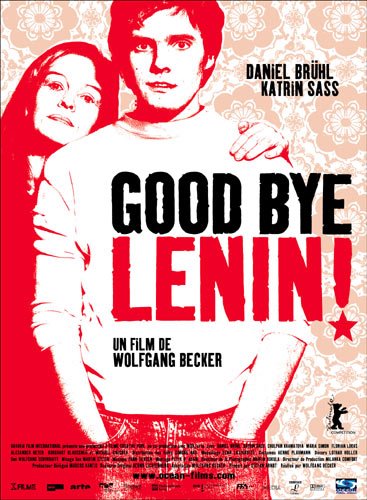
Rammstein is one of the main reasons for my current interest in the German language. That combined with the fact that this German movie is the most rented intl. movie in my local free library made me check it out. It is a well made movie that takes a nostalgic view of East Germany through the eyes of a son trying the save his mother's life. She went into a 8 month coma around the time the wall came down. Basically the world had changed around her. Trying to prevent her from being shocked, the son recreates the east in his bedroom and with the help of a friend's video skills on his television set. Overall pretty nice. Doesn't overwhelm you with brilliance, but a nice and easy way to understand how the wall fell and who it fell on.

Sunday, December 18, 2005

The war on Christmas


Christmas drives me insane. Nothing to do with shopping or the crowds, just the cheesy tunes you hear for more than a month. The soundbites this year got nonsensical with Mr. O'Reilly singing his carol. If you have been living in a hole in the frozen ground, good ol' Bill wants to put the Christ back in Christmas and has declared war on the PC crowd who wish Happy Holidays instead of Merry Christmas (why isn't it Merry Diwali or Ramzan, I shall never know. But that is not the point here). Nicholas Kristof (columnist, NY Times) started this new round by saying that maybe the commentrators should focus on saving Christians dying in Darfur (Kristof is deeply invovled journalistically and emotionally to Darfur). Bill O'Reilly responded with some crap calling him a leftwing idiot or something to that effect. Kristof responded in this article. He has upped the ante by titling the article "Challenge to O'Reilly".

Perhaps I'm particularly sensitive to religious hypocrites because I've spent a chunk of time abroad watching Muslim versions of Mr. O'Reilly - demagogic table-thumpers who exploit public religiosity as a cynical ploy to gain attention and money. And I always tell moderate Muslims that they need to stand up to blustery blowhards - so today, I'm taking my own advice.

So I have a challenge for Mr. O'Reilly: If you really want to defend traditional values, then come with me on a trip to Darfur. I'll introduce you to mothers who have had their babies clubbed to death in front of them, to teenage girls who have been gang-raped and then mutilated - and to the government-armed thugs who do these things.

You'll have to leave your studio, Bill. You'll encounter pure evil. If you're like me, you'll be scared. If you try to bully some of the goons in Darfur, they'll just hack your head off. But you'll also meet some genuine conservative Christians - aid workers who live the Gospel instead of sputtering about it - and you'll finally be using your talents for an important cause.

So, Bill, what'll it be? Will you dare travel to a real war against Christmas values, in which the victims aren't offended shoppers but terrified children thrown on bonfires? I'm waiting to hear.


This insane state of affairs makes me wish for a Silent Night...pun fully intended.

Saturday, December 10, 2005

The greenest of them all

“To me, proving that earth’s climate is changing from human actions—namely global warming—is like statistically ‘proving’ the pavement exists after you have jumped out a 30-story building. After each floor, your analysis would say, ‘so far, so good,’ and then, at the pavement, all uncertainty is removed.”

Wanna guess who said this?? You will be excused for thinking it must be some leftie or some well meaning scientist. It's actually an industry guy; an insurance industry CEO. In a unique and predictable twist, insurance industry leaders are realising that the house always wins only when the house is still standing. Extraordinary changes in the playing field can lead to a losing streak. So major insurance industry giants like Swiss Re are actively considering premium changes and educating its customers about global warming. This has obviously lead to extremely critical statements in Wall Street and other traditionally climate sceptic communities. But when an industry that is 3 times the size and power of the oil industry (insurance worldwide is a 3 to 5 trillion dollar business) crunches its numbers and makes its move, it is very tough to argue against it. Like a good casino owner, Swiss Re is basing its policy not on emotion but the cold fact that the number of recent natural disasters is well beyond what any of its models predict.


The American insurance industry joined the European camp when AIG decided after Katrina to start investing in industries that have active greenhouse mitigating technology or related research. However the key difference is that the Europeans are educating people quite openly about what is happening, and how it might affect reinsurance rates. Swiss Re for example has an openly declared 250 Million Euro warchest just for investing in green technologies. An early result of this policy is a documentary series they financed called The Great Warming. I found it funny that this documentary aired in 2004 had the following lines in it : And the city of New Orleans - already well below sea level and sandwiched between the Mississippi and the sea - is certain to be a victim. Tarot reader John Williamson reads the future, and it's grim.!! The American insurance industry on the other hand is expected to make small efforts to cover its losses and improve its future without openly going against the mainstream industry. It is a more wait and watch policy because in America, unlike in Europe, they can pass the buck to consumers. As already reported widely, consumers in Hurricane Central can expect to pay more to live there with insurance.

To me, personally, the interest shown by the insurance industry is heartening. Not because i think they are turning a new leaf; i could care less about that. But because the underlying principle of the free market has been proven right. Everyone and everything has a price. When the price is too high, change shall occur on its own; in its substantial but at the same time unjudging and uncritical way. Sure, it might be change at what used to called a Hindu rate of change, but change due to economic reasons have a much higher longevity and chance of success than change because some few million tree huggers like me wanted it that way.

Thursday, December 08, 2005

when the chinese go farming and the latin go trading


Time was when video games used to mean Mario Bros; when i would rather break the damn thing than hand it over to my sister...or some chinese farmer dude.

Time was when sweatshop workers meant young kids working and making your jeans when they actually should have been playing games. Unlike today when it means chinese youth getting paid 56 cents an hour to collect gold in WoWarcraft

Check these series of articles from NYTimes about video game farming: the booming industry where people collect and sell "gold" and other gaming previleges. I am sure that these morons could use a 12 step program!!
Nytimes article 1

Article 2


On another more positive note, I discovered Mercora, Latin for trade, the newest P2P kid on the block. Started by a McAffe exec along with others, this uses a neat loophole in the DMCA (digital copyrights act) to bring us P2P radio/webcast with the option of recording the song. Perfectly legal and free till a certain point (i think it is 1 hour per day, but not so sure). Anyways, i am hooked. Listened to Rosenrot, Rammstein's new album; release date in the U.S. unknown.

Tuesday, November 22, 2005

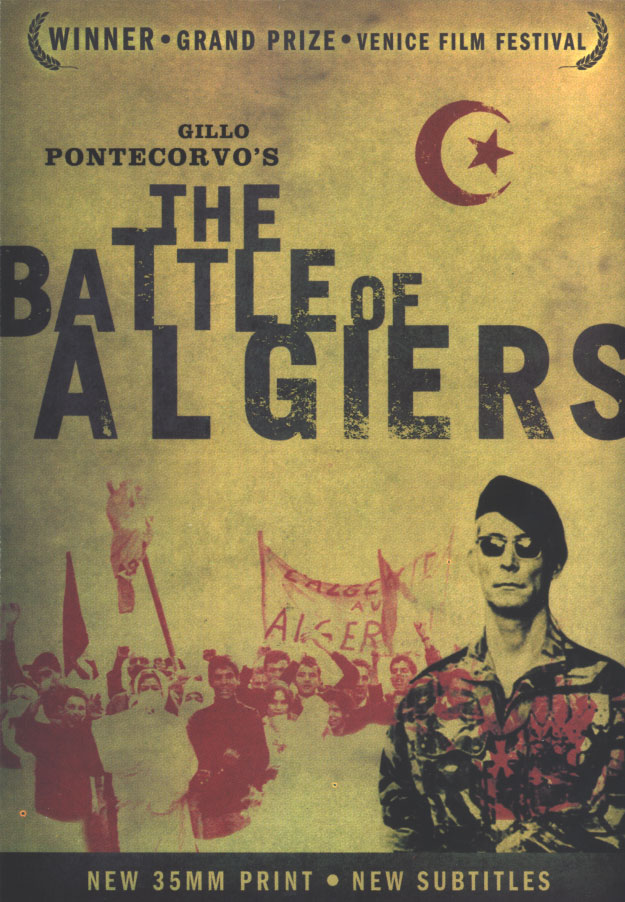
La Battaglia di Algeri


The story is of a country being born, the actors are its people and the set is the city of Algiers itself. A totally unbiased rendering of the Algerian war for independence, it ranks as one of the most interesting movies I have seen. The film tracks the initial armed rebellion against the French colonizers in the city of Algiers. (1956-57). The story is set before the mass uprisings of 1961-63 which pushed the French out. But given the overtly bloody nature of the initial struggle, there are eerie parallels between what is depicted here and what undoubtedly happens throughout the world in places like Iraq, Sri Lanka, Kashmir, former Punjab etc. Some of the dialogues could be used to understand the psyche of both "occupier" and "occupied" almost anywhere in the world. Therein lies the sign of a good script.

"Give me your bombers and you can have our baskets" --Rebel leader Ben M'Hidi answering a French reporter's question stating the cowardice of Algerian women placing bombs in baskets.

"The real quesion is should we remain in Algeria? If you answer "yes," then you must accept all the necessary consequences. " --French Col. Mathieu when asked whether the French paratroopers torture.

The entire movie has a grainy documentary style feel to it. I quite didn't understand the disclaimer at the beginning "None of the shots in the movie are from newsreels" till i saw the whole movie. It is hard to believe that this is a work of fiction based on true events. It is interesting that all shots are on location and quite a few roles are played by non-professionals.


The movie doesn't romanticize the armed rebels. It shows them as what they are, killers who believe that they are killing for a reason. There are scenes in the movie where you almost side with them, but the next second they are planting a bomb in a cafe` and you cringe.


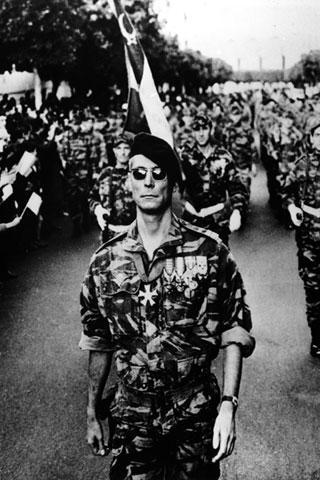
The French paratroopers are shown as extremely effective and as torturers. But the movie's brilliance lies in not villainizing individuals among the French. It shifts the blame squarely to the disconnect between political will and military reality. Military occupations by their nature are messy because the overarching theme is to kill before you get killed. Col.Mathieu rues the fact that he gets only 24 hours to make a rebel speak as the Algerians have a practice of changing plans within 24 hours if someone in the info chain is caught. So his character is adamant that once you send your men to fight, don't expect them to follow your civilian niceties. It's of no use for left-wing newsmen to write criticisms of particular operations after the men have been sent to war.

It is obvious that many people see a parallel between this movie and what is happening in Iraq today. The desire of the American people to change Iraq for the better juxtaposed with the desire to not have torture. This movie and Col.Mathieu argue that the only way to end torture or the necessity of torture is to not be there in the first place.

Sunday, November 13, 2005

Orlando

Yet another conference, yet another trip to the same place. Orlando. I can't believe that all my conferences happen either within 100 miles of Champaign or in Orlando. I am growing tired of Disney. Anyways...here are a few pics of the awesome resort I stayed in. Talk of lavishness! BTW...did you know that Orlando was almost entirely a swamp till Walt Disney imagined this place up while flying over it?