I do not claim to "know" what caused the current financial crisis. I don't think it is a single person or factor. Lack of regulation is cited to be a major reason. But what I do not understand is what is it that was not regulated enough. Was it the ability of small and large banks/credit unions to lend to people who did not qualify for "prime" loans? Or was it the lack of regulation on how banks and credit services lend to each other and trade with each other? Or was it the lack of regulation on how these subprime loans get lumped together and insured? Greed is cited to be another reason. And any of exactly the same set of people as above (home owner, lender, mortgage firm, mortgage trader) can be attributed with greed as well. Stop here for a minute and think. It is easy to talk about regulation or greed of others. But how far are you ready to blame the single parent with one income for wanting to own a house? Maybe regulation at the bottom level, whereby unnecessarily large loans or loans to "risky" individuals would be avoided like the plague, would have avoided this credit mess altogether. But that wouldn't achieve the original intention: get more people access to housing. I believe Bush came up with the idea of an ownership society. It is easy to lampoon Bush and his half thought through schemes. But at its heart, the idea of enabling ownership of houses/land is a good one. Indian history has shown a remarkable correlation between ownership of land; in this case tied to land reform; and economic and social progress (wish I had a link). Moreover, why is it that Grameen Bank gets a Nobel for issuing what are in effect subprime loans while local banks in the US are being scalped for issuing such loans? Could it be the fact that Grameen's "peer-insurance" as opposed to mortgage insurance in the U.S combined with its reliance on donors is a better model to provide loans to those who cannot afford it?
Or who knows...maybe in fact the problem was caused by huge salaries and McMansions? I would love to find out what percent of the bad loans went to low-income subprime lenders and what percent went towards subprime McMansions.
Saturday, October 04, 2008
Veterans of domestic wars
John McCain suggests that he would freeze spending due to the current financial crisis. Except for defense (duh), "critical" sectors (whatever that is) and veterans' care. Fine. I understand. I have eaten noodles out of a cup for lunch when in grad school; belt tightening is a natural corrective instinct. I know John is a veteran and that the U.S is in the middle of a few wars. But why single out veterans of foreign wars or for that matter military veterans alone for benefits? What about the support to veterans of the war against crime or the war against drugs or for that matter the war to leave no children behind. Sure, calling all domestic struggles "wars" is counterproductive. But heh...I didn't invent the terminology or the tactics used in any of the so called wars. I digress. The point being, why is it that the mechanism and the people to conduct foreign wars is more important than those used to conduct domestic ones? How do you expect the domestic wars to succeed if the schools and civil services are left to rot because the economy is "cratering"? Maybe it is time to form a VDW? Not to counter VFW, but to supplement it?
Ctrl+Alt+Delete
Two year hiatus. LOT has changed in between. New people in my life. Published. Graduated. Moved. From the Midwest to the Pacific Northwest. Another roadtrip...this time up and down the west coast. New set of things to report about. Time to restart.
Monday, January 01, 2007
this blog is for posterity
i dont know why....but blogging seemed too much work, i stopped. might restart sometime later. but otherwise, this shall remain unchanged, as a lens into my past :)


Thursday, September 14, 2006
South Dakota

The first stop on my road trip. And the first state where it felt like a road trip. A mixture of mindblowing sights and mindnumbing monotony, South Dakota captures the essence of any road trip. Entering from the southeast via 29 and connecting to 90 on the westward journey, the monotony is broken only by ubiquitous billboards announcing the distance to "Wall Drug" and promising free ice water if you make it there. A quintessential American road trip invention, Wall Drug achieved fame through these ads on the various highways in S.Dakota. The brainchild of the owner during the early 30s, it took a life of its own when people started planting these direction/distance boards in foreign countries and places as far as the north pole.

The boredom is shattered quite spectacularly once you close in on the city of Wall, which is the southern tip of the Badlands national park. There are desolate places and then there is the badlands. It is a treat for anyone with any interest in geology. Spectacular colors, winding night-time driving through scary landscapes and the sheer emptiness had me bought at word go. Even though we spent only a few waking hours in the national park, it made its impression. So, if you travel through S.D on 90, plan on pitching a tent in the emptiness of the badlands. Wake up and go drink a cup of ice water at Wall Drug!
(Pictures courtesy: Dr. Vijay Gopalakrishnan, fellow traveler, friend, philosoper..at least by degree, and guide)
Friday, August 18, 2006
3 brown guys, a tent and a rental car

Actually a lot more...but that summarizes the essential members of my 5000 mile, 10 day roadtrip. Crazy idea, made crazier still by the fact that gas hovered around 3 dollars to the gallon through the trip. It is tough to put in words the sights seen, things done and not done, experiences and discoveries. I wish I had enough pictures to speak the unspoken words..but my camera decided to quit on me a day before the trip and I was left with a point and shoot with a 50 photo limit on battery and memory. Oh well, at least that made me stop and soak in the sights rather than capture them using second rate photography skills! Anyway, here is my meager photo album. I hope to add links to my co-travelers' more considerable albums soon.
The first thing you discover while road tripping through the Midwest and the great plains of the US is the sheer size, beauty and variety of this country. Places you have flown over while coast hopping become real asphalt and scenery experiences. Within a day's drive you go from cornfields to desolate wastelands to evergreen forests. The second thing you discover is how much of an intruder you and I are. It is almost as if man is an aberration in a sea of land, crisscrossing rivers and rivers of concrete that somehow seem to just blend into the mountainsides. If you leave out the small townships that occasionally crop out of nowhere to provide you with gas and food, there is an overpowering feeling of emptiness. Not in a negative way. For, paraphrasing Tolstoy, all populated areas are alike, it is only the empty and desolate ones that differ from each other in their emptiness.
While traveling by interstates and state roads for an extended period, you begin to appreciate a few realities; the importance of having a non T-mobile cell phone, how good a hot shower feels, how good it is to have a large vehicle with enough room to store all your stuff, that there are more stars in the night sky than you can count, that remaining unconnected for a week fills your inbox but frees your mind...
In the coming days, I shall try to add some details of few of the places I visited and what made them unique/interesting.
Tuesday, July 18, 2006
Friday, July 07, 2006
Obama watch
This man amazes me. Read a transcript of his recent speech. I may not agree with quite a bit of what he says, but it is tough to argue against eloquence.
Friday, June 23, 2006
goal!!


You will be nearer to Heaven through football than through the study of the Bhagavad Gita--Swami Vivekananda
(Disclaimer: Found these pics on yahoo news. In other words, all your pics (and base) are belong to yahoo. just couldn't pass these by!)
Tuesday, June 20, 2006
Music to my ears

I normally don't listen to much popular music. I reserve my ears for better stuff like rock, trance, etc etc. But once in a while, there are artists worth a dekko despite being currently popular (complicated oxymoron). Here are two artists with talent, sense of music and the "do your thing" spirit.
If you have been living outside of a cave, you should have heard the new "group" Gnarls Barkley. Well, at least their song "Crazy", which is somewhere close to being the most popular song of the moment. The brain behind this group turns out to be a guy nicknamed "Danger mouse" aka Brian Burton. He shot to fame/notoriety a couple of years back with his out of the box remix titled "The Grey Album". Burton's music in essence cannot be classified into any one slot. That usually means either no one is interested in your music or everyone is. Looks like Burton is slowly getting into the second category. Good for him and good for us listeners.

The other artist currently making waves on both shores of the Atlantic: KT Tunstall. A Brit Chinese-Irish musician with a catchy name and an inexplicable penchant for legwarmers, she has a great voice. At least I think so. I must admit that I have not heard more than 3 songs of hers. But I was intrigued when I first heard an acoustic rock version of her song "Black horse and a cherry tree". It has been a while since I had seen anyone use one of those foot operated loop pedals on stage. She uses this to add to her "alt" music. Try finding her stuff. I have been told quite a lot of her videos are available online for free.
Monday, June 12, 2006
Monday, May 29, 2006
The code

Despite the negative reviews in all major newspapers, I watched the Da Vinci code this weekend. There was no way I was going to pass up a movie with Hanks acting alongside beautiful Audrey Tautou in it. Though I have seen better acting from both, I think it was a decent movie.
While there are a few places where the whole cinema crew seems to have lingered on to admire something that the viewer doesn't see and isn't shown, the overall pace is decent. Cinematically, there are a few scenes that linger in your head after you leave the cinema. Most of Paul Bettany's acting (Silas) is quite arresting. Despite not being the most important scene of the movie, the visual juxtaposition of 18th century London with that of today's while depicting Newton's funeral was pretty close to genius. My biggest gripe: Overall, the movie retains a very third persony feel to it. At no point is the viewer engaged enough to become either Hanks or Audrey and solve the thing in their head. The screenwriting was wobblier than the text of the novel and most of the action sequences don't manage to transport you anywhere out of your seat.
Acting: Paul Bettany was natural. You can imagine a misguided religious nut through him. Thanks to him, Opus Dei is not going to see an increase in their roster anytime soon. Audrey brings intensity to certain scenes. I love her acting and her looks. This was nowhere close to her best (watch "A very long engagement" for comparison). Tom Hanks was a mixed bag. He is very "Terminal" here. Somehow despite being in almost all the scenes, you can't quite remember what his acting contribution was. He is in serious danger of melding too much into the environment with each passing movie. Ian McKellen was good as usual. Funny that he is also in the other big movie released recently (X-3).
Overall: I don't know what the fuss is about. If someone loses their faith because of this movie, they haven't been paying much attention till this point. Religion and religious books contain more lies than Dan Brown could fill in all of his books! So the church should stop whining.
Thursday, May 25, 2006
The great wall of Arizona


Arizona doesn't lack touristy sights. But there is a real chance to add one more, this one for generations to come. The Qin dynasty, after whom China is named, started building a wall to keep the illegal Mongols out. Arizona, Texas and California have the chance to build one to keep the new illegals out. So, while they are at it, why not make it grand. Build it such that it can fit a couple of SUVs going in each direction.
Given how royally future generations are going to get screwed by today's economic and environmental policies, its only fair that we build them a wall. Help them earn some tourism dollars.
Wednesday, May 24, 2006
1610-1984, 1896-??
In the year 1610 a scientist named Galileo came to the radical conclusion that the moons of Jupiter are well...the moons of Jupiter, i.e. they go around the planet Jupiter. Sounds lame? In fact, it was the nail in the coffin for the geo-centric model. There was proof that there are atleast a few celestial bodies that don't seem to care too much about us or in fact about the planet that we inhabit. It took till the year 1984 for the most powerful institution of the 1600s to agree that Galileo was right and they were wrong in threatening and bullying him.
It's been 110 years since a Swede named Arrhenius came up with a rather loony idea that maybe the carbon dioxide released by all the coal burning might be heating up the atmosphere. Since that point, numerous scientists contributed to this radical idea that we tiny humans are slowly but surely changing the world that we are living in. In a philosophical reversal, the same humanity that couldn't be convinced that we were inhabitants of an inferior rock mindlessly circling the sun are now steadfastly unwilling to believe that we as a whole are big enough to cause immeasurable harm.
The current high church of humanity, Anglo-America and the free traders that it spawned and continues to cherish and nurture still refuse to buy into the arguments of scientists. Half-hearted agreement with the conclusions have not resulted in any far-reaching steps. It is stunning to think how narrow businesses and governments can be in defining themselves and their interests. Stunning given the fact that large corporations usually are the last people who need to be reminded that their primary aim is to make money and keep making money. What is irreconcilable? The simple fact that every decade since the 1960s, the cost of natural disasters has doubled (source: UK insurance report). Yet, it took the insurance industry till 2003/2004 to wake up to the trouble it was in. The energy industry is happy to behave in a manner similar to the cigarette industry of the 70s. Leave tomorrow's problems to the day after tomorrow. BP and Shell are happy to pay lip service by investing peanuts in greener technology and providing "education" on their websites. And, thank you for driving. A simple redefinition of what their business is or even a re-reading of their own websites can prevent them future headache and help avoid irrelevancy. They are not in the oil business but the energy business. Yet, why don't we see Shell/BP/etc sponsored cleaner fuel technology development? Finally, no one has ever accused any government of thinking too far into the future. But the incapacity to listen to people who are paid to do so verges on the immoral/insane. A very likely scenario in the years to comeby is a couple of Katrinas in one year and the insurace industry hitting the ejector button leaving the government to fly a energy-starved plane from the wingman's seat. Do the governments have a plan? Will they survive 350 years to apologize to all the scientists that they are rubbishing now?
Wednesday, May 10, 2006
whatever you say
Here is an interesting perspective on populism and how the right and left traditionally differed on populism.
Well, what can i say...let them eat cake?
Well, what can i say...let them eat cake?
Monday, May 08, 2006
Memories
It was never to be. That was my reasoning all this time. I had a near relationship experience about two years back. I liked her, she digged me. But neither had the guts to admit that there was more than just the on and off flirting. We were too different. Name any feature; race, nationality, religion, money. We were on other sides of the fence. Then she moved back to her home country. Something that could have been never was. It was in some deep corner of my mind hid by layers of useful and useless memories till today morning. I saw her again. With someone else. We nodded and passed each other as if we were colleagues who had last seen each other a few hours back. And that hurt.
Sunday, April 23, 2006
Scale of Economies
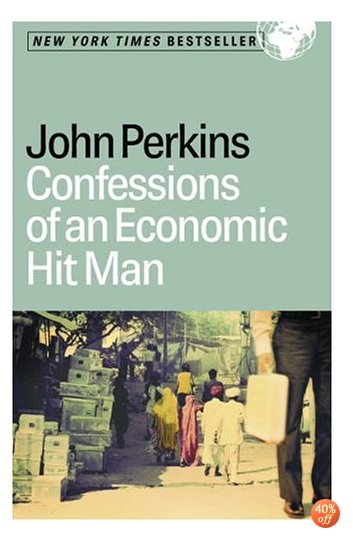

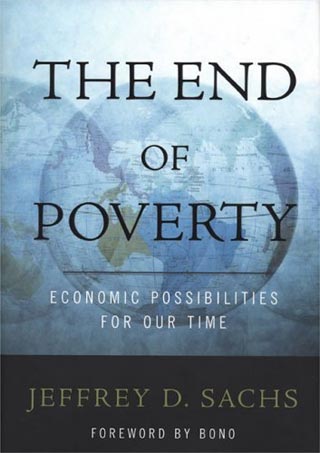
In my quest to quell boredom while flying (did quite a bit in the last 4 months), I read three books. Interestingly, they were all related to macroeconomics. These books and 2 talks, one by noted author and economist C.K. Prahalad and the other by the founder of Gramin bank M. Yunus, that I recently heard have me convinced of one thing. There are quite a few brilliant people deeply worried and spending a lot of think-time pondering about the reasons and solutions to global poverty.
The first book titled "The World is Flat" by NYTimes columnist Tom Friedman, takes the view that the problem of abject poverty can be traced back to the differences in opportunities from one set of people to another. The solution, hence, is the golden age of a "flat" world, where individuals are players in a more or less level playing or flat field. The author's panacea to poverty is the triumvirate of better communications (internet and actual physical communication), financial and social openness in certain developing economies (read India and China) and better educated individuals. The book, very well researched and written, is an optimistic view of how development blooms once the conditions are right. Some of the details listed are quite stunning like how UPS actually repairs Dell computers. That's right, they don't just ship damaged PCs and laptops. They actually collect it, repair it and send it back to the customer. Who knew! Without adding much more, let me just encourage you to read this book if you already haven't.
The second book "End of Poverty" by reknowned economist Jeffrey Sachs is more academic and at the same time emotional literature. Jeffrey Sachs has spent the better half of his life guiding governments like those of Chile, Poland and Russia after the commies, etc. on how to save their economies. In all these cases his main role was to persuade third parties to pump in money and save the day. Now he presents his case why the world should be pumping in money into Africa and other poor countries of the world. He wants to do all this not through the traditional loans or aid with riders (more on that below) but with outright aid with no riders on it. The book presents some interesting facts but can be hard reading because of all the...facts in it! However his main point is taken. Money is needed to kickstart certain essential aspects of any functioning economy; for e.g. financial institutions capable of lending money so that businesses that can potentially employ get started.
The third book "Confessions of an economic hitman" by John Perkins is a book in a different mold. While it is bound to be a favorite among conspiracy theory hacks, quite a bit of it is simply too tough to believe. The basic premise is that John Perkins in his youth was hired by MAIN, a former Boston firm specializing in energy consulting (somewhat like Halliburton) as an economic hit-man. His job: give a rosy outlook for energy consumption in third world countries so that the United States promises aid much in excess of what the country can ever pay back. If you did not know, aid is much more than money handed out. The usual rider is that the money has to be spent on specific projects and the purchasing has to be done from the donor country. So, if a country receives aid for energy projects from the U.S., companies like MAIN got the money not just to do a pre-investment check but also to do the building. Once the project was finished the country usually discovered that it never needed that big a project and of course cannot pay back, leading it to become economically and politically dependent on the donor country. The "beauty" of the system is that money lent to a country is usually collected from financial institutions in the United States and money spent on the projects is handled by the same set of institutions. Despite the money "handed back" to them, they still rightfully demand the principal back and when they cannot pay, the government or the army steps in depending on how deep of a mess the country is in. The author goes on to discuss specific "hits" that he carried out including a laundry list of failed Latin American countries and interestingly Saudi Arabia. Saudi Arabia, according to the author, was a whole different angle from the other hits. Here the idea was to pump in money into a country to modernize it and basically create a huge market in the likeness of an American marketplace and thus integrate it into the American economic system. A foolproof way of preventing a 1970s type oil embargo. Seems to have worked too well!
The common thread running through the three books is the fact that capital is free to move anywhere, except maybe North Korea and a few other godforsaken places. How it flows and to what effect decides our economic future. Ten bucks from your uncle is not the same as ten bucks from Uncle Sam and neither are the same as ten bucks made from selling your skills. That seems to be both the solution and the problem.
Sunday, April 09, 2006
Meditations at 40000 feet
1. Airspace, like Douglas Adams' space, is big. Mind-bogglingly big. Despite that, there is a necessity to employ thousands of gentlemen/(women?) called air traffic controllers, who show a flair for playing a version of quidditch in the sky. But why employ French ones. Bastards went on strike last week, leaving me on the ground inside a heated plane for a couple of hours. Leading to point two.
2. If you are queasy and showing it, people sharing the same row of seats are more worried than you will ever be about your situation.
3. The eastern coast of the Arabian peninsula with its large ports, cities and numerous oilwells makes for mindnumbing night-time gazing. Oil well flares in the middle east sky from 40000 feet. You can see them sucking the juice from down below and belching fire and smoke into the night sky. Mile upon mile of lighted highways feeding and being fed by these infernos.
4. They know where you live. Because you told them. Forgot the I-94 forms, even before boarding the flight to the US, you are supposed to tell them your address. I wonder whether someone is using these addresses for nighttime reading.
5. What are the chances of being assigned the same damn seat 3 out of 4 flights. 52 A...I shall not miss you. So far behind, you land in a different time zone from the pilot.
6. Why do Germans hate vegetarians? Something to do with Hitler being one? Since when did one banana qualify to become breakfast.
7. What you see below you from the windows is atleast 20 to 30 miles away.
Sunday, February 26, 2006
random
Here are a couple of music videos with a difference. The first is a cool video with shots from LOTR and Rammstein music. The second has video from Matrix and music, i believe, from Prodigy. Pretty good stuff.
----------------------------------------------------------------------------------
Here is an interesting quote i read on Andrew Sullivan's blog "Before entering a mosque, visitors are asked to take off their shoes. This is a sign of respect. If you have a strong objection to walking in your socks, don’t enter the mosque. Before becoming an Australian you will be asked to subscribe to certain values. If you have strong objections to those values, don't come to Australia," - Australian Treasurer, Peter Costello, while commenting about the cartoon wars going on.
As far as I am concerned....show your support for the Danes. Drink Carlsberg

------------------------------------------------------------------------------------
If you thought liberals were the only ones calling Bush's war a lost cause, you have to read this really insightful editorial in the conservative's version of the NYTimes, National Review. I am waiting to see how exactly the Bush administration chooses to disagree with Buckley and co. at NR. Will they have the guts to call him a liberal (:
------------------------------------------------------------------------------------
Love blondes? Then, this one is for you
----------------------------------------------------------------------------------
Here is an interesting quote i read on Andrew Sullivan's blog "Before entering a mosque, visitors are asked to take off their shoes. This is a sign of respect. If you have a strong objection to walking in your socks, don’t enter the mosque. Before becoming an Australian you will be asked to subscribe to certain values. If you have strong objections to those values, don't come to Australia," - Australian Treasurer, Peter Costello, while commenting about the cartoon wars going on.
As far as I am concerned....show your support for the Danes. Drink Carlsberg

------------------------------------------------------------------------------------
If you thought liberals were the only ones calling Bush's war a lost cause, you have to read this really insightful editorial in the conservative's version of the NYTimes, National Review. I am waiting to see how exactly the Bush administration chooses to disagree with Buckley and co. at NR. Will they have the guts to call him a liberal (:
------------------------------------------------------------------------------------
Love blondes? Then, this one is for you
Tuesday, February 21, 2006
Discovery of India

One of my memories of Doordarshan TV before private players were allowed into the Indian broadcasting arena was a program that I seldom watched, Bharat ek khoj! A TV adaptation of Nehru's "Discovery of India", I avoided it like the plague while my dad seemed to quite like it. So, naturally it took me a long time to pick up and read this novel. This surprisingly good read spans 550 pages and India's history as viewed by Nehru. My surprise stemmed part from reading what is essentially a politician's treatise and finding him showing his whole deck of cards. Sixty years and gazillions of dirty water under the bridge later, to read a politician reveal all his motivations without spin is a surprise.
The very fact that the author was Prime Minister for 17 years after independence makes this novel an important read. If you wish to understand why we did not become a developed country by adopting capitalism right away, this book can provide good answers. If you wish to understand why we did not end up becoming another Pakistan (a Hindu one), this book once again provides good answers. But most importantly, at many points in the text, you get the feeling that this book is more than Nehru. You get the inescapable feeling that he was talking for a generation of liberal policymakers who oversaw the transfer of a country and its destiny from His Majesty the Emperor of India to the common man and his representatives.
The book starts as a quasi-philosophical treatise written by a man in jail who compares his imprisonment and its debilitating effects on his psyche with that of India's occupation. To paraphrase him, his and India's ability to live in the present had been taken away by their imprisonment. To him, the impossibility of action meant the non-existence of the present. He refuses to be a prophet and talk much about the future. So he is left with the past. So the book continues with a historical analysis of India right from the pre Vedic times upto the Mughal and British period. All this leads into discussions of events then current, including the question of partition.
His stand on many issues including why India should be free, why the Quit India movement was launched and why partition is a wrong recipe are predictable. But what stands apart is Nehru's analysis of these issues and the way he conveys his conviction regarding each. I personally liked the history of the partition movement and how it started and thrived due to the differential rate at which the Hindus and Muslims adapted and interacted with the British and its educational system.
But the reason why I really liked the novel was that I could attempt to answer an age old question of mine. If I had lived in the early part of the previous century as a subject of the British empire in India, where would I have stood on issues facing the land. As a free Indian living today in an Anglophone country, my view of the British empire's legacy is murky at best. Especially given that I was born 33 years after and that today the sun never sets on the Indian call center regime servicing the former Empire and beyond makes it an even tougher question to answer. The circumstances couldn't be more different. The fact that I love British comedy and worship British rock doesn't make it any easier. Would I have lived a servile life or would I have taken up arms, actual or intellectual? I did not learn anything new from this text. I already knew about the massacres and the famines that India went through under the British. I already knew about the railway system and the civil service system that came about under the Raj. I also know that India, the crown jewel of the former Empire, is among the few former colonies that made it and did not go the way of former French colonies or Portuguese colonies. What Nehru and his novel helps one realize was that living in an imprisoned land was impossible to reconcile intellectually even for a moment. An objective analysis of the Empire's legacy using various statistics simply leaves out this intellectual component. There are certain things that one cannot be objective about, freedom being at the top of the spectrum. Though I still don't know the exact answer to my question on what i might have done, I do know that I would have been mighty pissed.
Subscribe to:
Posts (Atom)